
An Overview
Monolithic and micro-services : Both have their strengths and weaknesses, and choosing the right architecture for a particular project depends on a variety of factors, including the size and complexity of the application, the development team's expertise, and the organization's goals and priorities. In this article, we'll take a closer look at the differences between monolithic and micro-services architectures, their respective strengths and advantages, and how to choose between them for your next project.
Monolithic Architecture
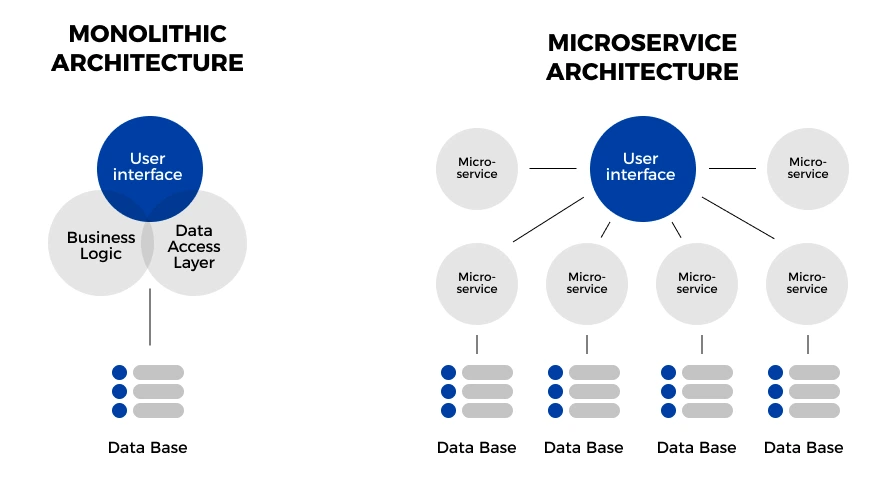
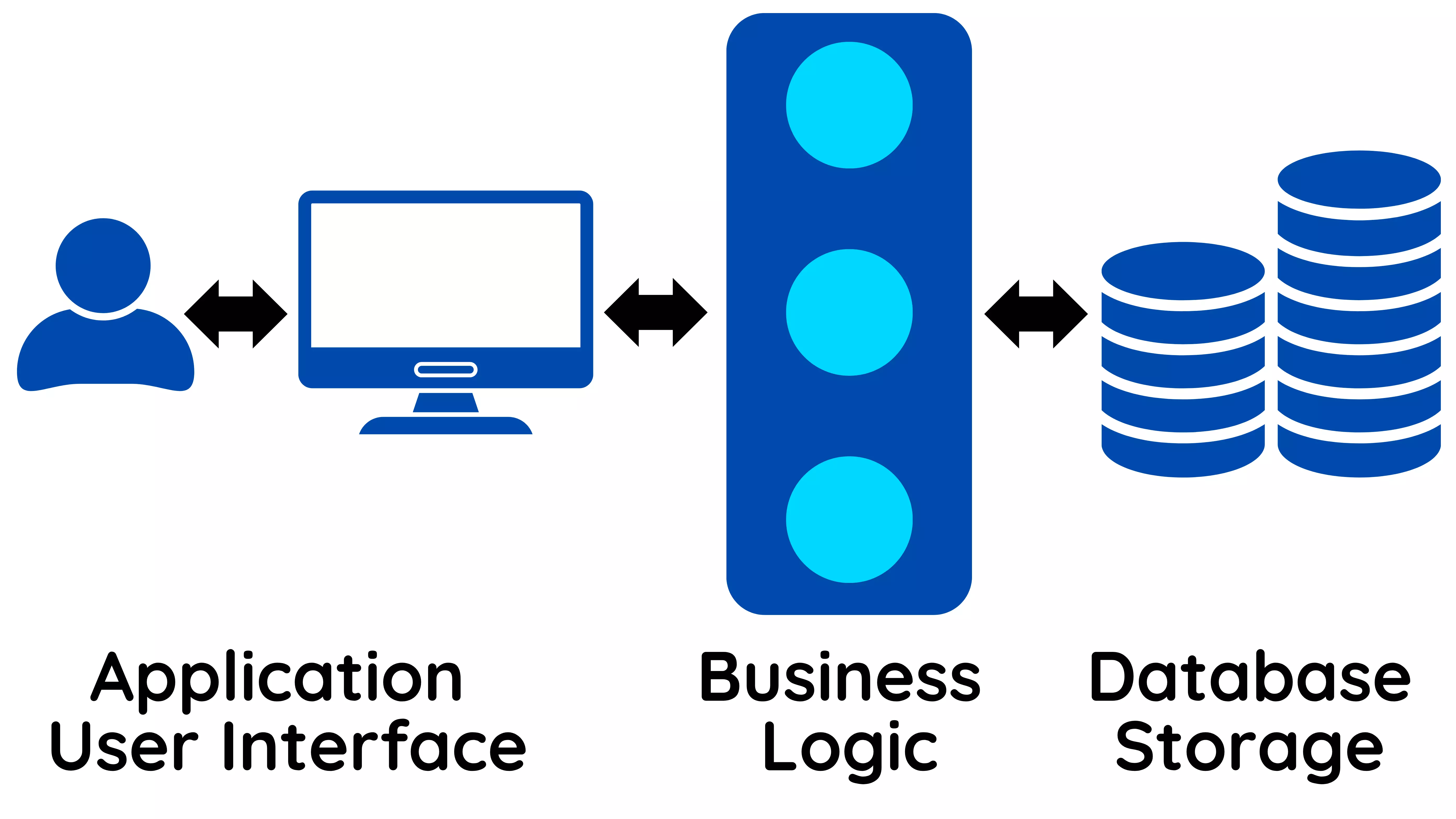
Monolithic architecture is the traditional approach to building software applications, where all the components of the application are tightly coupled and deployed as a single unit. This means that the entire application, including the user interface, business logic, and data access layer, is packaged and deployed as a single executable or binary file. When changes are made to any part of the application, the entire application must be rebuilt, tested, and deployed.
Advantages:
- Simplicity: Monolithic architecture is simple to develop and maintain as the entire application is housed in a single executable file.
- Performance: As all components of an application are present in a single file, there is no communication overhead between different components, which make the application fast and efficient.
- Simple deployment: Monolithic technology is not as complex as micro-service technology. Monolithic applications have fewer moving parts, so there are fewer components to manage and fix together. All in all, the self-contained nature of a monolithic app makes it easier to deploy, manage, and maintain than a micro-services solution.
- Security: Security is easier to implement in monolithic applications as the entire application is running on a single machine, making it easier to control access to different components.
Disadvantages:
- Scalability: Because monolithic architecture software is tightly coupled, it can be hard to scale. As your codebase grows and/or you want to add new features, you need to drag the entire architecture up with you. Even if you only want to boost or alter a single function, the entire application needs changing. This isn’t just time and resource-consuming but can also disrupt your continuous delivery.
- Limited Flexibility: Monolithic architecture can be limiting in terms of the flexibility it offers, as all components are tightly integrated, making it difficult to make changes to one component without impacting the others.
- Large Codebase: As all components of an application are present in a single file, the codebase of a monolithic application can become large and difficult to manage.
- Single Point of Failure: As the entire application is running on a single machine, any failure in one component can bring down the entire application.
- Development and Deployment Time: Monolithic architecture can be slow to develop and deploy, especially when the application is large, as changes made to one component can require recompiling the entire application.
Micro-services Architecture
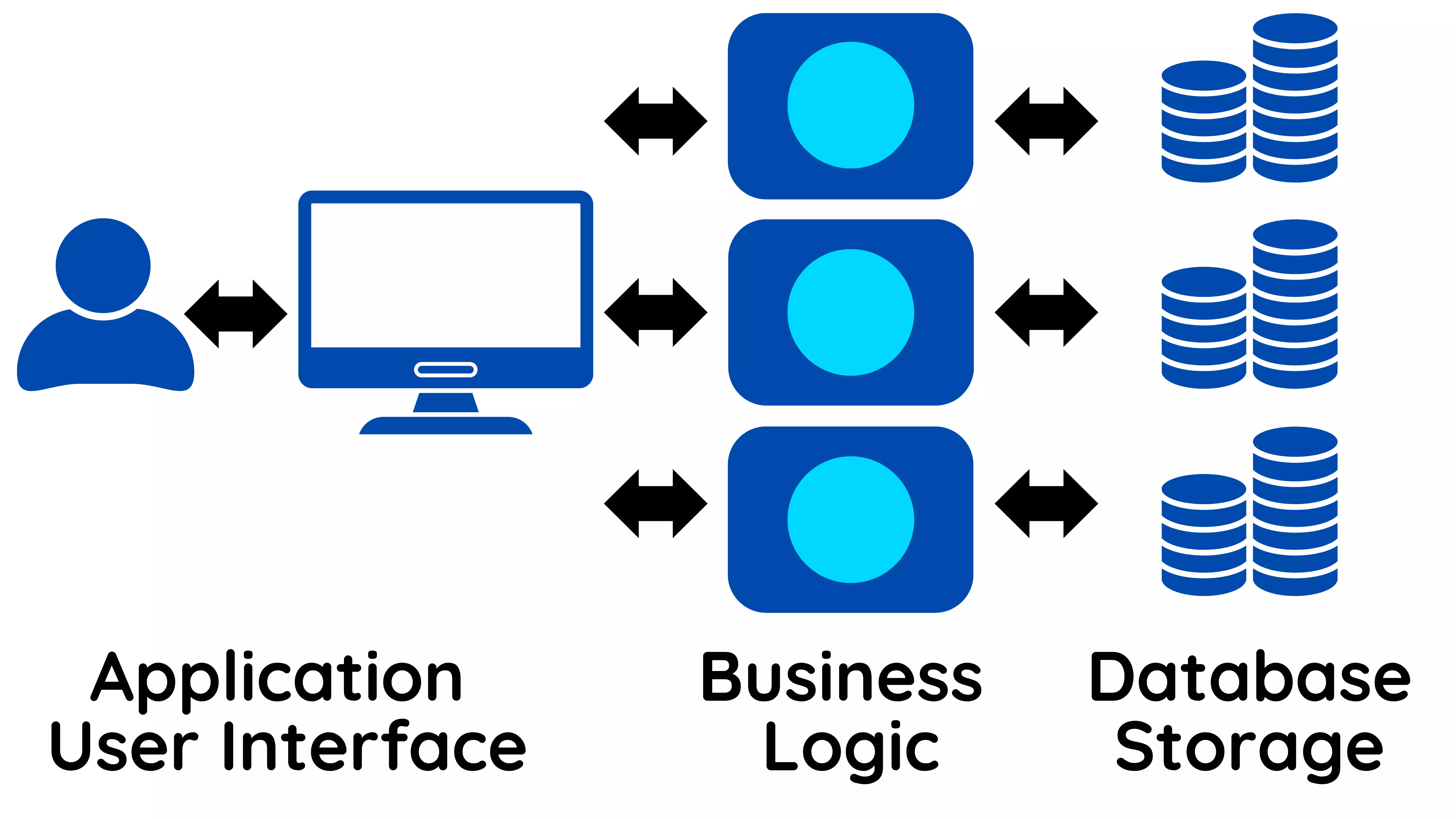
Micro-services architecture, on the other hand, is a newer approach to building software applications that involves breaking down the application into small, independent services that communicate with each other over a network. Each service is designed to perform a specific function and can be developed, tested, and deployed independently of the other services.
Advantages:
- Scalability: Micro-services architecture allows for easy scaling of individual services, making it easy to handle high traffic and large-scale applications.
- Flexibility: Micro-services architecture allows for greater flexibility in development and deployment, as each service can be developed and deployed independently of the others.
- Resilience: In micro-services architecture, if one service fails, it does not bring down the entire application, as other services continue to run.
- Technology Diversity: Micro-services architecture allows for the use of different technologies and programming languages for each service, enabling developers to choose the best tool for each task.
Disadvantages:
- Complexity: Micro-services architecture can be complex to design, develop, test, and maintain as it involves multiple independent services communicating with each other.
- Overhead: Micro-services architecture requires additional overhead in terms of communication between services and API management.
· High infrastructure costs: Each new micro-service can have its own cost for test suite, deployment playbooks, hosting infrastructure, monitoring tools, and more.
- Distributed System: Micro-services architecture creates a distributed system, which can make it challenging to manage and monitor, especially when dealing with failures and debugging.
- Integration Testing: Integration testing can be challenging in micro-services architecture as it involves multiple services interacting with each other, making it difficult to isolate problems.
Technologies involved in implementing Monolithic and Micro-services Architecture
The underlying technology stack for implementing monolithic and micro-services architecture can vary, depending on the specific needs and goals of the organization. However, there are some common technologies and tools that are typically used for each architecture.
For monolithic architecture, the technology stack typically includes a single codebase or repository, a web application framework, and a relational database management system. The web application framework is used to handle HTTP requests and responses, and the relational database is used to store data. Examples of popular web application frameworks for monolithic architecture include Ruby on Rails, Django, and Laravel.
For micro-services architecture, the technology stack typically includes multiple independent services that communicate with each other through APIs. Each service may have its own technology stack, depending on its specific requirements. However, some common technologies and tools used in micro-services architecture include containerization platforms such as Docker and Kubernetes, service discovery tools such as Consul or Etcd, and message brokers like RabbitMQ or Kafka. Additionally, micro-services architecture often relies on lightweight and fast web frameworks like Node.js, Flask, or Dropwizard, and NoSQL databases like MongoDB, Cassandra, or DynamoDB.
Regardless of the specific technology stack used, implementing both monolithic and micro-services architecture requires a good understanding of software design principles, distributed systems, and scalable infrastructure.
Differences Summary
Here is a table outlining the main differences between monolithic and micro-services architecture:
Monolithic Architecture | Micro-services Architecture | |
Deployment | Deployed as a single unit | Deployed as independent services |
Scalability | Horizontal scaling is difficult due to tight coupling | Horizontal scaling is easy as services are independent |
Complexity | Low complexity | High complexity |
Development | Simple and easy to develop, test, and deploy | More complex development and deployment processes due to independent services |
Maintenance | Small changes can have cascading effects | Services can be updated independently |
Expertise Required | Lower expertise required in distributed systems | Higher expertise required in distributed systems |
Flexibility | Low flexibility | High flexibility |
Communication | Tight coupling of components | Loose coupling through APIs |
Overall, monolithic architecture is simpler and easier to develop, but it becomes more difficult to scale and maintain as an application grows in size and complexity. Micro-services architecture offers greater scalability and flexibility, but it requires a higher degree of expertise in distributed systems and can be more complex to develop and deploy.
Choosing Between Monolithic and Micro-services Architecture
Choosing between monolithic and micro-services architecture depends on a variety of factors, including the size and complexity of the application, the development team's expertise, and the organization's goals and priorities.
For small to medium-sized applications or development teams that are just starting out, monolithic architecture may be the best choice. Monolithic architecture is simple and easy to develop, test, and deploy, making it a good choice for applications that don't require a high degree of scalability or flexibility.
However, as an application grows in size and complexity, or as the development team gains more expertise in building distributed systems, micro-services architecture may become a better choice. Micro-services architecture offers greater scalability and flexibility, allowing organizations to respond more quickly to changing demands and user needs. However, it also requires a higher degree of expertise and knowledge of distributed systems, making it a better choice for development teams that have experience with building and managing distributed systems.
Ultimately, the choice between monolithic and micro-services architecture depends on the specific needs and goals of the organization. Both architectures have their strengths and weaknesses, and choosing the right one requires careful consideration of the tradeoffs between simplicity and complexity, scalability and flexibility, and ease of development and maintenance. The choice between the two architectures ultimately depends on the specific needs and goals of the organization.